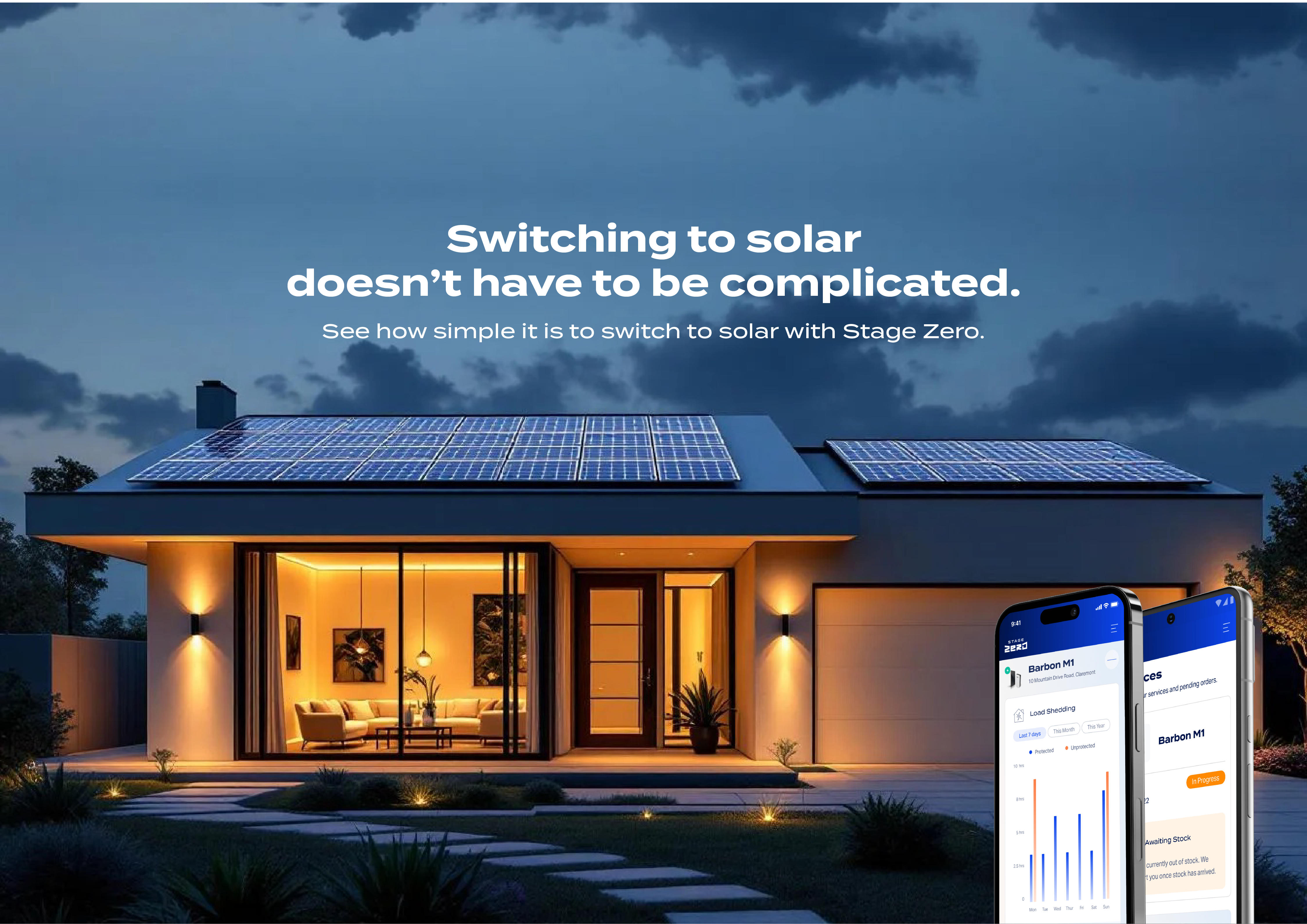
Holiday-proof your home solar system
As South Africans head out on holiday, the last thing anyone wants is to worry about electricity at home while they are relaxing in the bush, on the coast, or simply trying to unwind. A solar and backup setup is a game-changer, but only if it is treated like part of your home’s electrical system.
Here are some top tips before heading out:
1) Power down what you do not need
Before you leave, take a few minutes to shut down any appliances that do not need to run while the house is empty. In most homes, this includes the stove and oven, as well as the geyser or heat pump. If you are not sure which circuits can be safely isolated, do not guess; getting a quick check with a qualified electrician is far better than dealing with a problem while you are away.
Also, take a quick walk around the house and unplug devices on standby, such as your television or home entertainment system. Even though the standby draw is not always high, it reduces the “baseline load” your solar system has to carry for no reason and lowers the chance of nuisance trips while you are away.
Pool pumps are the one exception people often get wrong. In most cases, you want circulation to continue, so do not switch it off entirely unless you have a planned approach for water quality.
2) Do not switch off your solar and backup system to “save the battery”
A common misconception is that turning the system off protects battery longevity. In practice, it is usually better to let a well-designed system run normally. Batteries are healthiest when they maintain a stable charge balance, rather than being left inactive and then forced to recover suddenly.
At Stage Zero, our systems manage this automatically through intelligent monitoring. This means essential appliances like fridges and freezers stay powered and protected while you are away. If you want to understand what your home needs while you are on holiday, start with our savings calculator on our Homepage. It helps you estimate savings and identify the right solution for your home.
3) Safety first
A valid Certificate of Compliance (CoC) is the baseline for safe operation and should be in place before anything else. But compliance on its own does not guarantee that a system will continue operating safely once you are out of the driveway.
Modern solar and backup systems include built-in protections such as isolation and fault detection. The real difference shows when those systems are actively watched. Ongoing monitoring means performance issues and irregular behaviour are picked up early, rather than after something has already failed. We provide continuous oversight to ensure your solar system runs optimally even when you are not home.
4) Take surge and lightning risk seriously
Summer thunderstorms are common across parts of the country. Lightning-induced surges can damage household electrical systems, whether or not solar is installed. If you live in a high-risk area, a lightning protection assessment is important.
A qualified lightning protection contractor can assess earthing and bonding and confirm that your installation meets the relevant standards. This gives you peace of mind about whether your home is adequately protected and where additional measures may be needed.
A few practical points worth keeping in mind:
- Use a qualified specialist for lightning protection. Organisations such as the Earthing and Lightning Protection Association reference the relevant SANS standards and require compliance by certified practitioners.
- Consider surge protective devices where it makes sense. Plug-in surge protection can help for sensitive electronics, but it should not be considered the only line of defence.
- Check indicators on surge devices. Many devices have an indicator light that shows whether protection is still active. If it has done its job, it may need to be replaced.
When solar systems are actively monitored and managed, holidays become time away, not time spent worrying about what is happening at home.
For homeowners who want to understand what that level of control and savings could look like, the Stage Zero calculator on www.stagezero.co.za provides a clear, location-based starting point.